Dr. Gymbro
←

#protein intake

4 articles
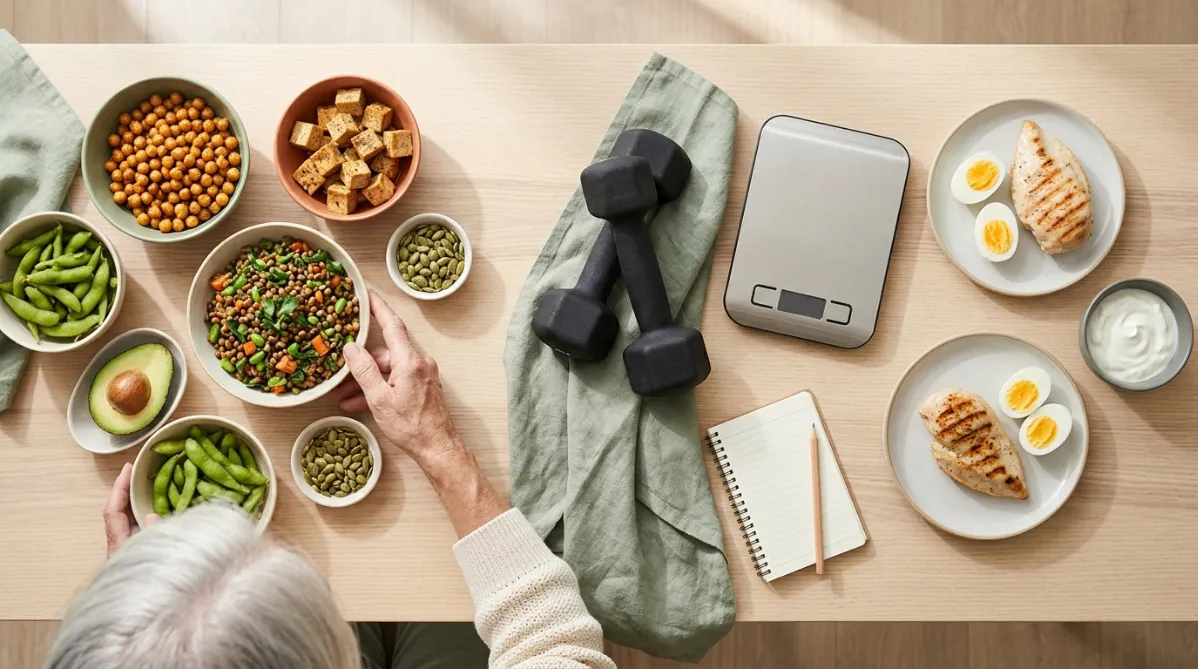
A bright, airy overhead flat-lay on a pale oak table in soft morning light. On the left, a vibrant plant-based protein spread in ceramic bowls: roasted chickpeas, marinated tofu cubes, lentil salad with herbs, edamame, sliced avocado, and a small dish of pumpkin seeds. On the right, a few contrasting items: a simple plate with grilled chicken breast, a hard-boiled egg halved, and a small bowl of Greek yogurt. Between the two sides, a pair of compact, matte-black hexagonal dumbbells rests on a folded sage-green linen towel, with a simple stainless-steel kitchen scale and a small open notebook with a pencil, suggesting tracking protein intake. A pair of weathered, elegant older hands, silver-haired and mid-60s, reaches in gently to pick up a bowl, with a casual cream knit sleeve visible. Natural window light casts soft diagonal shadows across the table. The palette is warm and muted: sage green, cream, terracotta, soft charcoal, with pops of fresh green and orange from the vegetables. Shallow depth of field, crisp focus on the food and dumbbells, gentle blur at the edges. The composition follows a clean editorial style with generous negative space at the top and right for headline text. The overall feel is modern wellness-magazine photography: calm, clean, and inviting, with tactile textures of linen, ceramic, wood, and fresh produce. Landscape 16:9 framing.
nutrition

¿Te vuelves vegetariano después de los 55? Lo que reveló un ensayo de entrenamiento con 108 personas

BY DR. GYMBRO ·

¿Estás pensando en dejar la carne mientras entrenas a los 50, 60 años o más? El ensayo aleatorio IMPACT, con 108 adultos mayores, mostró que tanto vegetarianos como omnívoros ganaron masa muscular y fuerza tras 12 semanas de entrenamiento de resistencia. Sin embargo, el grupo vegetariano consumió menos proteína (1,24 vs 1,58 g/kg/día) y obtuvo menos masa muscular apendicular (+0,38 vs +0,66 kg). Los investigadores no pudieron demostrar que la dieta vegetariana fuera no inferior, y el resultado muscular resultó estadísticamente inconcluso. Aquí explicamos lo que realmente demuestra el estudio, sus limitaciones y cómo fijar objetivos de proteína si entrenas con una dieta basada en plantas.
A bright, minimalist editorial flat-lay photographed from above on a pale warm-gray stone countertop in soft natural window light. On the left, a ceramic plate holds a keto-style meal: a seared salmon fillet with crisp skin, half an avocado with a glossy pit, a scattering of bright green asparagus spears, and a small dish of golden olive oil. On the right, a matte black dumbbell rests beside a folded sage-green linen towel and a slim stainless steel water bottle. A raw egg and a few whole eggs in a shallow wooden bowl add a protein cue. In the center, a clean analog kitchen scale and a flexible cream-colored measuring tape curl gracefully in a loose spiral, hinting at body composition tracking. A small open notebook with a minimal hand-drawn line graph, with no legible text, sits at the lower edge with a thin brass pen.

The palette is calm and modern: muted sage green, creamy ivory, warm terracotta accents from a small clay ramekin, and deep charcoal from the dumbbell. Shadows are soft and long, falling diagonally, giving gentle depth. The composition leaves generous negative space at the top and right for title placement. Shallow depth of field, crisp focus on the salmon and dumbbell, subtle film-like grain, and a refined, trendy health-journal look reminiscent of contemporary wellness magazines. Natural, airy, balanced, and slightly editorial, with no people, no text, and no futuristic elements.
nutrition

¿El keto protege el músculo en una fase de corte? Los datos de masa magra sorprenden

BY DR. GYMBRO ·

Keto suele presentarse como una forma que protege el músculo durante una fase de corte, gracias a los supuestos efectos anticatabólicos de los cuerpos cetónicos. Una nueva revisión narrativa en *Nutrients* pone a prueba esa idea con datos clínicos y la encuentra insuficiente. Las dietas cetogénicas reducen mayormente la grasa, pero los meta‑análisis muestran pérdidas ligeramente mayores de masa libre de grasa que las dietas no cetogénicas. El problema es que DXA y BIA no pueden separar el músculo del agua y del glucógeno, por lo que el efecto real sobre el músculo sigue sin estar claro. Lo que realmente protege el tejido magro es el conocido trío de proteína adecuada, entrenamiento de fuerza y un déficit moderado.
A landscape editorial photograph of a sunlit kitchen table, shot from a slightly elevated three-quarter angle. On the left, a rustic ceramic bowl holds a warm plant-based protein meal: roasted chickpeas, marinated tofu cubes, edamame, quinoa, and wilted greens, topped with toasted sesame seeds. Around it are small dishes of lentils, walnuts, pumpkin seeds, and a block of tempeh on a wooden board. On the right, a pair of weathered hands belonging to an older adult with silver hair, partially visible and softly out of focus, rests beside a pair of light dumbbells and a rolled sage-green yoga mat leaning against a chair. A linen napkin, a glass of water with a lemon slice, and a small handwritten notebook with a pen suggest careful planning. Soft morning light streams through a large window on the left and casts gentle long shadows across the pale oak tabletop. The color palette is muted and earthy: warm cream, sage green, terracotta, soft mustard, and natural wood tones. The background has shallow depth of field, with blurred shelves of herbs in pots and a few hanging plants. The mood is calm, hopeful, and health-focused, in the style of a modern lifestyle magazine or science journal feature, with clean composition, generous negative space in the upper right for headline text, and a subtle film-like grain. No text, no logos, no futuristic elements.
nutrition

¿Veganismo a los 65 años? La masa magra cayó 1,15 kg en 12 semanas

BY DR. GYMBRO ·

Un ensayo aleatorizado de 12 semanas con 72 adultos de 65 años o más mostró que pasar a una dieta vegana sin planificar la proteína les costó 1,15 kg de masa magra. El grupo omnívoro se mantuvo estable. Añadir entrenamiento de resistencia redujo la pérdida a 0,62 kg, lo que ayudó bastante pero no la eliminó. El culpable real fue una caída de la ingesta proteica de unos 20 a 28 g/día, no las plantas en sí. A continuación, se resumen los datos y se dan recomendaciones para proteger el músculo con una dieta basada en plantas.
A wide, editorial-style flat lay photographed from above on a pale warm-gray stone surface, bathed in soft natural window light with gentle diagonal shadows. On the left side, a minimalist matte white ceramic plate holds a balanced bulking meal: sliced grilled chicken breast, a mound of fluffy basmati rice, roasted sweet potato wedges, and bright green broccoli, with a drizzle of olive oil glistening. Beside it sits a tall glass of water with a lemon slice and a small bowl of Greek yogurt topped with blueberries. On the right side, a round analog clock face is subtly placed, or a simple wooden clock with a minimalist design, its hands marking noon, with a soft arc of eight small brushed-brass discs arranged in a curved line beside it, suggesting an eight-hour eating window. A sleek black notebook with a pencil rests nearby, with a few hand-drawn tally marks and a tape measure loosely coiled next to it. A single dumbbell with a matte charcoal finish sits at the top right edge, partially cropped, hinting at strength training. The color palette is muted and sophisticated: sage green, warm cream, terracotta, soft charcoal, and touches of brass. Generous negative space on the right third for title text overlay. Shallow depth of field with crisp focus on the plate, subtle film grain, and a calm, modern wellness-magazine aesthetic reminiscent of contemporary health and fitness journals. Clean composition, natural textures like linen napkin and speckled ceramic, and no people or text visible.
nutrition

Ayuno 16:8 en fase de volumen: mismo músculo, menos de la mitad de grasa ganada

BY DR. GYMBRO ·

Los levantadores que comprimieron su fase de volumen en una ventana de 8 horas ganaron tanto músculo como fuerza que los que comen normalmente, y acumularon menos de la mitad de grasa. La clave no es que el ayuno sea mágico, sino que el grupo 16:8 simplemente consumió menos del superávit previsto, lo que también implicó menos proteína y carbohidratos. Este ensayo aleatorio de 12 semanas sugiere que la alimentación restringida por tiempo funciona como una herramienta de adherencia para un volumen magro, no como un truco metabólico. A continuación, los números, el objetivo de proteína que se mantuvo y a quién le conviene probarlo o descartarlo.

This page is available in